How to Start Day Trading From Scratch With a Simple Beginner Setup
You can order the same kind of articles for your own video to boost it on YouTube and Google. Just message the Telegram bot @sat_sit_bot. The bot writes and publishes the articles itself (with your YouTube video embedded) on popular topical websites (no ads). Try it free: 50 articles on us.
· based on the channel Jooviers Gems
Day trading from scratch means choosing one market, learning to read candlesticks and market structure, practicing on a demo account for weeks, and risking a small fixed amount per trade before you ever pay for an evaluation. The fastest path is not a secret indicator but a repeatable routine: one setup, one risk rule, one journal. If you want to follow the same trades and lessons shown in the breakdown, the Inner Circle is where the full trade list lives.
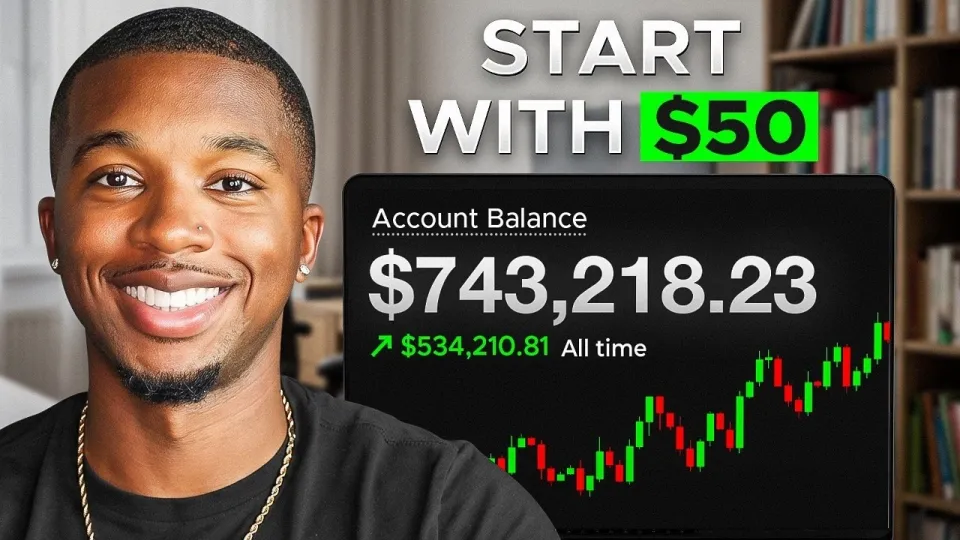
The video "Easiest Way To Start Day Trading From Scratch (Exactly What I Did)" from the channel Jooviers Gems walks through that exact beginner path, which is why so many viewers describe it as the clearest explanation they have found. The comments under it are a useful map of what actually trips people up: impatience, comparing yourself to social media highlight reels, and jumping into live money before the basics are automatic.
What day trading actually is and what it is not
Day trading is buying and selling a financial instrument inside the same session, closing every position before the market shuts so you never carry overnight risk. It is not investing, and it is not a side hustle that pays you on day one.
The instruments a beginner will meet most often are forex pairs, index and commodity futures, and large-cap stocks. Each has different hours, tick values and margin rules, and mixing them in your first month is the single most common way to turn a simple plan into confusion. Trading is a skill built through repetition, the same way you would learn an instrument: short daily sessions, deliberate practice, honest review.
What day trading is not: a lottery ticket, a guaranteed income, or something you can learn from a highlight clip of someone else's winning day. The traders who last treat it as a business with costs, records and a process.
The beginner checklist before you place a single trade
Before any live order, a new trader needs four things in place, and skipping any one of them is what usually ends the journey early.
- A demo account with a broker or platform you understand, funded with virtual money.
- A charting setup with one or two timeframes, not ten.
- A written risk rule, for example risking 1% of the account per trade.
- A journal, either a spreadsheet or a dedicated tool, ready before the first entry.
This is the stage where patience pays. A viewer who documented a month of demo trading and backtesting reported being up over $8,000 on that virtual account including losses, and described it as proof they were on the right track rather than proof they were ready for real capital. That is the correct reading: a profitable demo month is evidence your process works, not a promise about live results.
Reading candlesticks and market structure step by step
A candlestick is a compact record of price over a fixed period, and every candle carries four numbers: open, high, low and close. The body shows the distance between open and close; the thin wick or shadow shows how far price traveled and then rejected.
Read them in this order:
- Identify the direction of the body: green or bullish when the close is above the open, red or bearish when it is below.
- Look at the wicks: a long upper wick means buyers pushed price up and sellers took it back, a long lower wick is the reverse.
- Compare the candle to the ones before it to see whether momentum is expanding or fading.
- Mark the recent swing highs and swing lows so you know where price is reacting.
Market structure is simply the sequence of those swings. Higher highs and higher lows describe an uptrend, lower highs and lower lows describe a downtrend, and a sideways range is price going nowhere in particular. Beginners who learn to label structure before hunting entries stop taking trades in the middle of nowhere, which is where most avoidable losses come from.
Choosing one market and one setup
Pick a single market for your first months, and pick a single setup you can describe in one sentence. A setup is not a feeling; it is a condition, such as price pulling back to a level you marked and printing a rejection candle in the direction of the trend.
Futures contracts like the micro versions of index products are popular with beginners because they trade in defined sessions and have small tick values. Forex pairs suit people who can watch the London or New York session. Stocks demand attention to the opening range and earnings calendars. None of these is inherently easier; the one you can study consistently is the one that works for you.
Once the setup is defined, backtest it. Scroll back through your charts, mark every valid occurrence, and log what happened. This is unglamorous and it is the part that separates people who eventually trade from people who keep restarting.
Risk rules that keep a small account alive
Risk management is the part of day trading that decides whether you are still here in six months. A small account cannot survive oversized positions, no matter how good the entry is.
Set a fixed risk per trade, commonly 1% or less of the account, and calculate position size from the distance to your stop rather than guessing. Define a daily loss limit, for example two or three losing trades and the screen goes off for the day. Define a daily profit target too, because giving back a good morning is one of the most common patterns among new traders.
A stop loss is not optional and it is not a sign of weakness. Placing it at the moment you enter removes the decision from the emotional part of your brain, which is exactly where bad trades are born.
Why many beginners move toward funded accounts
Prop firm evaluations let a trader use the firm's capital instead of their own, usually after passing a profit target with a maximum drawdown rule. For someone with a small personal account, this is a way to trade meaningful size without risking rent money.
The trade-off is real: evaluations have strict rules on daily loss, overall drawdown and consistency, and breaking one rule ends the attempt. Read the rulebook before you pay for anything, and treat the evaluation as a test of discipline rather than a shortcut to income. Trading firm capital is still trading, with the same need for a journal and a fixed risk per trade.
Common beginner questions and doubts
Most of the hesitation new traders express comes down to a handful of recurring worries, and each has a practical answer.
How long before live money? Give the demo and backtesting phase at least a month of consistent sessions, and move to live only when your process is boring and repeatable. Some people take longer, and that is normal.
What if I lose my first trades? You will, and the plan should assume it. A losing trade inside your risk rule is a cost of doing business, not evidence that you are doing it wrong.
Should I compare my progress to other traders online? No. Social media shows outcomes, rarely the months of screen time behind them, and comparing your week one to someone's year three is a reliable way to quit early.
Can I start with a very small amount? Yes, and you should, as long as the amount is money you can afford to lose and your position size respects your risk rule.
Useful links
- Inner Circle, all trades and lessons: https://www.getgemify.com/innercircleo?el=youtube_organic
- Instant funding to trade with: https://www.theedgefunder.com/
- The Edge Funder Discord community: https://discord.gg/WpJXHKK7f2
- Joovier on Instagram: https://www.instagram.com/joovier_
- Recommended forex broker: https://herofx.co/joovier/
Final thoughts on starting day trading the simple way
The easiest way to start day trading from scratch is not the most exciting one: one market, one setup, a demo account, a fixed risk per trade and a journal you actually fill in. Everything else, from candlestick reading to funded accounts, is built on top of that routine. The breakdown by Jooviers Gems is worth watching because it shows both the wins and the reality behind them, which is the kind of content that helps a beginner improve instead of just feel motivated. If you want to follow the same trades and keep learning in a structured way, join the Inner Circle and start with the process, not the profits.
Key takeaways
- Start on a demo account and backtest for at least a month before risking real money.
- Pick one market and one setup instead of jumping between forex, futures and stocks.
- Learn candlestick anatomy first: open, high, low, close and what the wick shows.
- Risk a fixed small percentage per trade and journal every entry, exit and emotion.
- Prop firm funding lets you trade firm capital after passing an evaluation.
Questions & answers
How much money do I need to start day trading from scratch?
You can start with a demo account and zero real capital while you learn candlesticks, structure and risk rules. When you move to live trading, use only money you can afford to lose, and size positions so a single loss stays around 1% of the account. A small account is fine if the risk per trade is small too.
How long should I practice on a demo account before trading live?
Plan on at least a month of consistent demo trading and backtesting, and longer if your results are still random. The signal that you are ready is not a profit number but a repeatable process you can follow without hesitating. Move to live only when your routine feels boring.
What is the easiest market for a beginner day trader?
There is no universally easiest market, but micro futures and major forex pairs are common starting points because they have defined sessions and clear tick values. What matters more is picking one market and studying it daily instead of jumping between stocks, forex and futures. Consistency in one market beats variety.
Do I need a prop firm evaluation to trade with real size?
No, but funded accounts let you trade firm capital after passing an evaluation with a profit target and drawdown limits. They suit traders with a small personal account who already have discipline and a journal. Read the full rulebook first, because breaking a daily loss or consistency rule ends the attempt.
Source: Easiest Way To Start Day Trading From Scratch (Exactly What I Did) · Markdown version